AI/ML
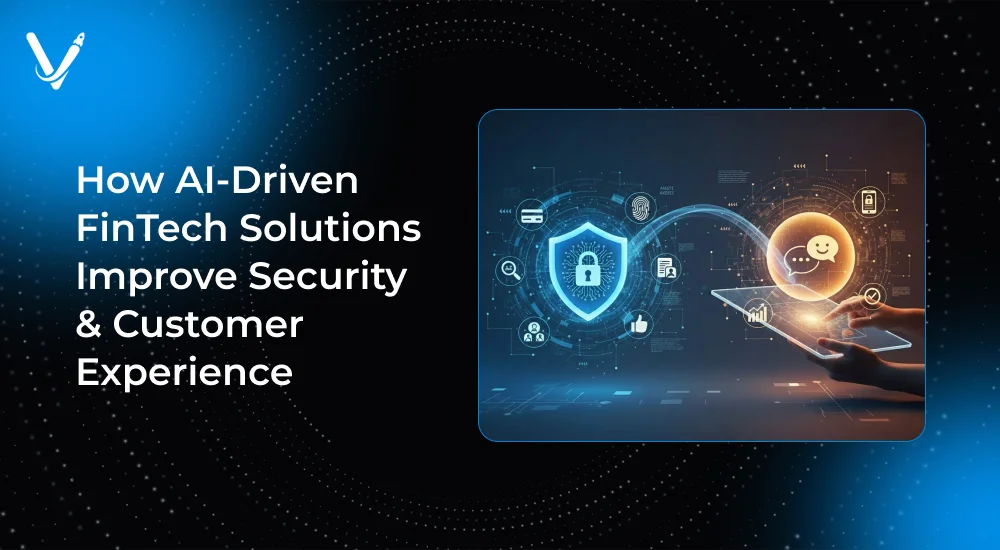
How AI-Driven FinTech Solutions Improve Security & Customer Experience

 Dec 3, 2025


Key Takeaways
The financial technology (FinTech) revolution is redefining how people interact with money. Banks, payment providers, and investment firms are rapidly evolving into digital ecosystems powered by artificial intelligence. Every transaction, recommendation, or security check increasingly depends on algorithms that learn, adapt, and predict user behavior. In this landscape, two things matter most: security and customer experience.
AI-driven FinTech solutions address both challenges simultaneously. They protect financial data against ever-evolving cyber threats while providing customers with faster, smarter, and more personalized digital experiences. What used to take days—loan approvals, fraud investigations, investment decisions—now happens in seconds with AI intelligence integrated into modern financial platforms.
This article explores how AI is transforming FinTech through enhanced security and elevated user experience. It unpacks how machine learning, deep learning, natural language processing, and predictive analytics are used to prevent fraud, strengthen compliance, and personalize services for millions of users worldwide. By the end, you’ll understand how AI-powered FinTech is setting new standards of trust, efficiency, and innovation in financial services.
Artificial Intelligence has become the central nervous system of FinTech. It bridges technology, finance, and customer interaction through intelligent automation and data-driven decision-making. FinTech companies rely heavily on AI to analyze massive volumes of financial data in real time—transactions, behavioral patterns, and risk indicators—to create actionable insights.
The AI-FinTech integration isn’t limited to one aspect of finance. It influences payment systems, lending, wealth management, insurance, regulatory compliance, and cybersecurity. Each segment benefits from AI’s ability to process unstructured data, recognize patterns, and adapt to new information without human intervention.
By combining AI’s analytical strength with FinTech’s digital agility, financial institutions are achieving two core goals:
• Strengthening security measures to counter sophisticated threats.
• Delivering hyper-personalized experiences that increase user satisfaction and retention.
This balance between protection and personalization defines the next generation of digital finance.
Fraud is one of the most persistent challenges in the financial world. Traditional rule-based systems could identify only known patterns, leaving institutions vulnerable to new attack techniques. AI-driven FinTech solutions change the game by using machine learning algorithms that continuously learn and adapt.
AI systems analyze thousands of transactions per second, detecting suspicious activity the moment it occurs. For example, if a customer’s credit card is suddenly used in a foreign country within minutes of a local purchase, AI models flag the anomaly and automatically block the transaction.
Machine learning allows systems to recognize subtle irregularities—such as transaction size, timing, device type, or geolocation—without predefined rules. This makes AI far more effective than static fraud filters.
AI enhances identity protection through behavioral biometrics, analyzing how users type, swipe, or interact with their devices. These invisible identifiers create a behavioral signature unique to each customer. Any deviation triggers verification or alerts, adding an extra layer of real-time security.
AI also powers facial recognition and voice authentication systems that reduce the risk of identity theft. These technologies are widely adopted in digital banking apps to ensure secure logins and transactions.
Unlike reactive systems, AI uses predictive models to forecast potential fraud based on historical data. By identifying early warning signs, institutions can intervene before losses occur. Predictive analytics also help banks assess credit risk, insurance claims, and loan approvals more accurately, ensuring fairer decisions and fewer defaults.
Through these intelligent layers of detection and prevention, AI enables financial systems to stay one step ahead of cybercriminals.
AI in Cybersecurity: Guarding Data and Infrastructure
Financial organizations manage some of the most sensitive data in the world—account details, personal identifiers, and transaction histories. AI strengthens cybersecurity by continuously monitoring network behavior and identifying potential breaches before they cause harm.
AI systems can distinguish between legitimate and malicious activities using historical data and pattern recognition. For example, if an internal system suddenly begins sending encrypted data externally, AI algorithms identify it as suspicious and alert administrators instantly.
Unlike human analysts who can miss subtle indicators, AI detects hidden threats—such as zero-day attacks or insider breaches—that evade conventional security software.
Cybersecurity in FinTech must evolve as fast as hackers innovate. AI introduces adaptive defense mechanisms that modify their responses based on new attack vectors. This dynamic approach minimizes false positives and ensures security policies evolve in real time.
NLP tools analyze online forums, hacker chatter, and dark web data to identify emerging risks. By scanning thousands of sources daily, AI creates a threat intelligence ecosystem that keeps institutions prepared for the next wave of cyberattacks.
AI improves encryption protocols by automating key management and detecting weaknesses in cryptographic systems. It also ensures compliance with global privacy standards such as GDPR, enabling secure data handling across borders.
In essence, AI transforms cybersecurity from a reactive shield into a proactive, intelligent guardian of financial integrity.
Security may protect the system, but customer experience wins loyalty. In today’s digital economy, users expect financial services to be as seamless as streaming music or ordering food. AI makes this possible by creating intuitive, personalized, and responsive financial ecosystems.
AI analyzes user data—spending habits, income patterns, investment preferences—to craft personalized product recommendations. For example, an AI-powered banking app might suggest a savings plan aligned with the customer’s goals or a low-risk investment option based on their transaction history.
By tailoring financial insights to individual needs, AI transforms banking into a personal advisory experience rather than a transactional service.
AI chatbots and virtual assistants are revolutionizing customer interaction. They handle queries, resolve issues, and guide users through complex processes such as account setup or loan applications. These AI systems respond instantly, understand natural language, and continuously improve based on user feedback.
Beyond convenience, AI chatbots reduce operational costs while ensuring consistent, friendly communication. This round-the-clock support has become a major differentiator for modern FinTech platforms.
Voice assistants powered by NLP make financial interactions more human. Users can ask for their balance, make payments, or set reminders through simple voice commands. The convenience of conversational banking fosters trust and engagement while simplifying access for users of all technical levels.
Some FinTech companies are experimenting with emotion AI to gauge customer sentiment during support interactions. By analyzing tone, text, or facial cues, these systems identify frustration or satisfaction levels and adjust responses accordingly. The result is more empathetic and human-like customer service.
AI doesn’t just make financial services faster—it makes them friendlier.
Credit evaluation has long depended on rigid scoring models that often excluded potential borrowers lacking traditional financial histories. AI-based FinTech platforms disrupt this limitation by using alternative data sources—such as digital payments, utility bills, or even social signals—to assess creditworthiness.
Machine learning models analyze thousands of data points to identify trustworthy borrowers beyond standard metrics. This democratizes access to credit for underserved populations and small businesses that may have been overlooked by conventional systems.
AI automates the underwriting process, analyzing applications in seconds instead of days. By integrating predictive risk analytics, lenders can approve loans faster while maintaining low default rates. The efficiency of this process improves customer experience and expands financial inclusion.
AI continuously monitors borrower behavior post-disbursement, detecting early signs of financial stress. This allows lenders to take proactive measures such as restructuring payments or offering support—reducing losses and improving relationships.
AI brings transparency, speed, and fairness to lending—qualities that redefine the modern credit ecosystem.
Wealth management is no longer reserved for high-net-worth individuals. AI-based FinTech solutions such as robo-advisors provide data-driven investment guidance to anyone with a smartphone.
Robo-advisors use algorithms to create and rebalance investment portfolios based on user preferences and market conditions. They continuously monitor asset performance and make real-time adjustments, ensuring users achieve optimal returns with minimal manual intervention.
These systems are powered by AI models that learn from historical data and market trends, providing personalized financial advice at a fraction of traditional costs.
AI enhances forecasting accuracy by analyzing large datasets of economic indicators, news sentiment, and market patterns. Predictive analytics help investors identify opportunities and mitigate risks before they impact portfolios.
AI integrates behavioral analytics to understand user goals and risk tolerance. It can notify users about spending anomalies, savings milestones, or better investment opportunities. This individualized approach deepens customer engagement and promotes long-term loyalty.
Through these intelligent tools, AI makes financial growth accessible, affordable, and aligned with user aspirations.
Regulatory compliance is a major concern for FinTech companies, especially in regions with evolving financial laws. Non-compliance can lead to massive fines and reputational damage. AI-powered RegTech solutions automate compliance management, saving time and reducing errors.
Know Your Customer (KYC) and Anti-Money Laundering (AML) processes are mandatory but traditionally slow. AI automates identity verification, cross-checking databases, and flagging suspicious transactions instantly. This ensures adherence to regulations without compromising customer onboarding speed.
AI tools track regulatory changes in real time and update compliance workflows automatically. They can also generate audit trails and reports, ensuring transparency for regulators and internal teams alike.
AI assigns risk scores to transactions or users, prioritizing those requiring human review. This helps compliance teams focus on critical cases instead of sifting through thousands of false alerts.
AI in RegTech not only improves operational efficiency but also builds trust by maintaining integrity and transparency across financial networks.
Data is the currency of modern finance, and AI is the engine that extracts its value. Every transaction, click, or customer interaction generates data points that can reveal meaningful insights when analyzed correctly.
AI enables real-time analytics, allowing FinTech platforms to make instant decisions on credit, fraud, or customer engagement. This immediacy improves responsiveness and ensures competitive advantage.
AI algorithms identify patterns in large datasets, helping businesses forecast trends, optimize pricing, and allocate resources effectively. Decision intelligence transforms reactive decision-making into proactive strategy.
By clustering users based on behavior and preferences, AI helps financial institutions design personalized campaigns and product offers. The result is higher conversion rates and deeper customer relationships.
In a data-driven world, AI gives FinTech companies the clarity and agility to navigate complexity with precision.
While AI brings immense value, it also introduces ethical responsibilities. FinTech companies must ensure fairness, transparency, and accountability in AI models.
If AI systems are trained on biased data, they can inadvertently discriminate against certain demographics. FinTech developers are now focusing on explainable AI (XAI) frameworks that make decisions transparent and auditable.
Users must have control over how their data is used. AI systems are being designed with privacy-by-design principles, ensuring data anonymization and informed consent in every process.
Even the most advanced AI needs human supervision. Combining human judgment with machine precision ensures decisions remain ethical and aligned with regulatory standards.
Ethical AI builds the foundation of trust that sustains customer loyalty in the FinTech ecosystem.
Trust is the cornerstone of financial relationships. AI enhances it in multiple ways—through transparency, consistency, and proactive communication.
AI ensures customers feel secure through visible protection measures like instant fraud alerts and seamless verification. It also builds emotional trust through intuitive design and personalized engagement.
When customers know their data is protected and their needs understood, loyalty follows naturally. FinTech brands that prioritize AI-based trust mechanisms enjoy higher retention and stronger reputations in the marketplace.
Despite its advantages, integrating AI into FinTech comes with challenges such as data security concerns, regulatory complexity, and model transparency. However, advancements in federated learning, quantum-safe encryption, and ethical AI are addressing these barriers.
The future of AI in FinTech points toward autonomous finance, where systems manage budgets, investments, and payments without user intervention. The combination of Edge AI, blockchain, and real-time analytics will create ecosystems that are not only intelligent but self-evolving.
In the coming decade, AI will redefine financial empowerment—making transactions safer, services smarter, and customer experiences more human.
Artificial Intelligence is no longer an accessory to financial technology—it is its driving force. By enhancing security, AI safeguards financial ecosystems against fraud and cyberattacks. By improving customer experience, it creates personalized, intuitive, and accessible financial journeys. Together, these capabilities redefine how people trust, interact with, and benefit from digital finance.
Enterprises that invest in AI-driven FinTech solutions are not just keeping up with technological trends—they are building the foundation of tomorrow’s financial world, where speed, safety, and satisfaction coexist seamlessly.
If you’re ready to transform your FinTech platform with intelligent automation and customer-centric innovation, Vasundhara Infotec897can help. Our AI-driven FinTech development services empower financial institutions with cutting-edge analytics, robust security, and seamless user experiences.
Let’s innovate the future of finance together.
Connect with us today and bring intelligent FinTech solutions to life.
Copyright © 2026 Vasundhara Infotech. All Rights Reserved.