AI/ML
SGE Meaning (Google Search Generative Experience) Explained

 Dec 22, 2025


Key Takeaways
Search has always been the gateway to information on the internet. Every major shift in search technology has reshaped how people find answers, how businesses attract customers, and how content creators build visibility online. The introduction of Google Search Generative Experience, widely known as SGE, represents one of the most significant transformations in the history of search.
If you have noticed search results that look more conversational, more summarized, and more context-aware, you are already seeing early signs of this change. Google SGE brings artificial intelligence directly into the search results page, allowing users to receive rich, synthesized responses rather than scanning multiple links for answers.
This article explains the full meaning of SGE, how it works, why Google introduced it, and what it means for SEO, businesses, marketers, and content creators. You will gain a deep understanding of how search is evolving, how SGE affects visibility, and how to adapt your digital strategy for an AI-driven search future.
SGE stands for Search Generative Experience. It is an AI-powered enhancement to Google Search that uses generative artificial intelligence to produce summarized answers directly within search results.
Instead of presenting only a list of blue links, Google SGE analyzes multiple trusted sources, understands the intent behind a query, and generates a comprehensive response at the top of the page. This response is designed to help users understand a topic faster and more efficiently.
At its core, SGE aims to reduce friction in the search journey. Users no longer need to open multiple pages to gather information. The AI-generated snapshot provides an overview, while links to sources remain available for deeper exploration.
SGE does not replace traditional search results. It augments them by adding an intelligent layer that interprets and organizes information in a conversational format.
Google’s mission has always centered on organizing the world’s information and making it universally accessible and useful. As user behavior evolved, search queries became more complex, conversational, and intent-driven. People now ask multi-part questions, compare options, and seek explanations rather than simple facts.
Traditional search results struggled to satisfy these needs efficiently. Users often had to jump across multiple websites to piece together answers. Meanwhile, AI chatbots demonstrated how generative models could deliver coherent, human-like responses instantly.
Google introduced SGE to bridge this gap. By integrating generative AI into search, Google improves clarity, saves time, and enhances the overall search experience. It reflects Google’s response to changing expectations and the growing role of AI in digital discovery.
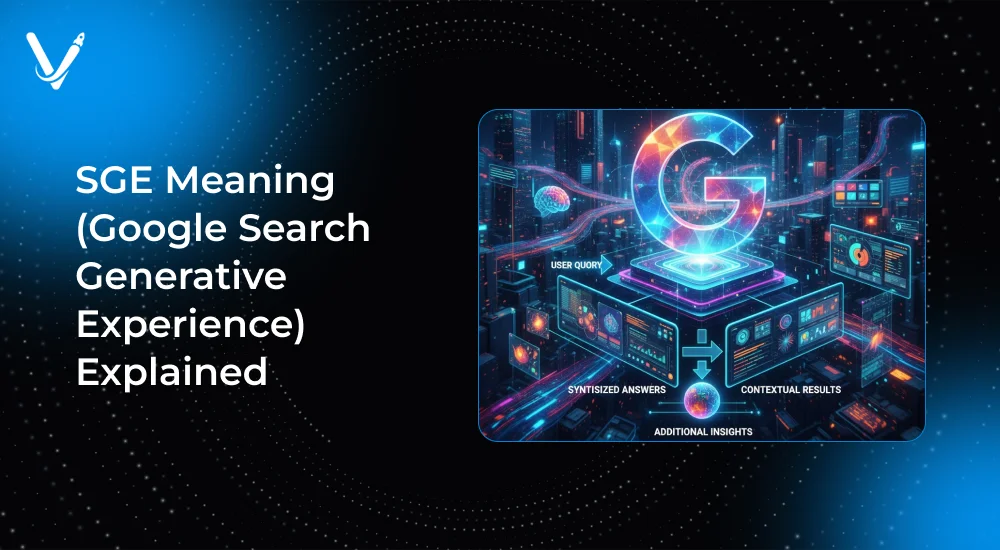
Google SGE operates by combining large language models with Google’s existing search infrastructure. When a user enters a query, several processes happen simultaneously.
First, Google interprets the intent behind the search. It analyzes keywords, context, and phrasing to determine what the user is really looking for. Next, it scans its index to identify high-quality, relevant sources that address the topic.
The generative AI model then synthesizes information from these sources into a structured response. This response highlights key points, comparisons, explanations, or steps depending on the query type. Importantly, Google still references and links to original sources to maintain transparency.
The result is an AI-generated snapshot that appears prominently on the search page, followed by traditional organic results and other features like images, videos, or product listings.
SGE is particularly effective for queries that require explanation, comparison, or synthesis. These include informational searches where users want an overview of a topic.
For example, searches related to technology concepts, health topics, travel planning, financial comparisons, or how-to guidance are well-suited for SGE responses. The AI can summarize key considerations, benefits, drawbacks, and options in a single view.
SGE also supports follow-up questions. Users can refine or expand their query within the same search session, creating a conversational experience similar to interacting with an AI assistant.
Traditional Google Search relies heavily on ranking individual web pages based on relevance, authority, and user signals. Users typically scan titles and snippets, then click through to websites for detailed information.
SGE changes this dynamic by placing an AI-generated answer at the forefront. While organic links still matter, the initial interaction often happens with the AI summary rather than individual pages.
This shift affects how users consume information. Instead of reading multiple articles, users may rely on the AI overview for quick understanding. This makes visibility within the SGE snapshot increasingly important for brands and publishers.
However, SGE still depends on the web ecosystem. Without high-quality content, the AI cannot generate accurate responses. This keeps content creators relevant, even as the presentation layer evolves.
Artificial intelligence is the engine that powers SGE. Google uses advanced language models trained on vast datasets to understand language, context, and relationships between concepts.
These models excel at summarization, comparison, and explanation. They can connect ideas across multiple sources and present them coherently. This allows SGE to answer complex questions that traditional search struggled to handle efficiently.
AI also helps personalize results based on user intent, location, and previous interactions, while still respecting privacy guidelines. The experience feels more intuitive and responsive than classic search.
One of the biggest concerns around SGE is its impact on search engine optimization. Since SGE provides answers directly on the results page, users may click fewer links, leading to reduced organic traffic for some websites.
This does not mean SEO is becoming obsolete. Instead, SEO is evolving. Visibility now depends not only on ranking but also on being recognized as a trusted source worthy of inclusion in AI-generated summaries.
Content that demonstrates expertise, authority, and clarity has a higher chance of being referenced by SGE. Structured content, clear explanations, and accurate information become more valuable than ever.
Websites that rely on shallow content or keyword stuffing may struggle, while those that focus on depth and usefulness are more likely to benefit.
Traditional keyword strategies often focused on ranking for specific phrases. With SGE, intent matters more than exact wording.
Search Generative Experience responds well to natural language queries and conversational phrases. This encourages content creators to write in a more human, question-driven style.
Long-tail keywords, semantic relevance, and topic coverage gain importance. Instead of optimizing for a single keyword, it becomes essential to address an entire subject comprehensively.
This aligns with Google’s long-standing emphasis on helpful content and user satisfaction.
SGE favors content that is easy to understand and well-organized. Clear headings, logical flow, and concise explanations make it easier for AI to extract and summarize information.
Content that answers common questions, explains concepts step by step, or compares options transparently is particularly valuable. Visual clarity, proper formatting, and contextual relevance all contribute to better SGE inclusion.
Rather than writing solely for search engines, content should be written for people first, with AI naturally recognizing its value.
Google has emphasized Experience, Expertise, Authority, and Trust as key quality signals. SGE amplifies the importance of these factors.
AI-generated summaries rely on credible sources. Websites with proven expertise, strong brand reputation, and trustworthy content are more likely to influence SGE outputs.
This means showcasing real-world experience, citing sources, maintaining accuracy, and avoiding misleading claims. Thought leadership and original insights help distinguish content in an AI-driven environment.
For businesses, SGE changes how customers discover products, services, and information. Brand visibility may come from being cited in AI summaries rather than direct clicks alone.
This creates new opportunities for thought leadership. Brands that educate their audience and provide valuable insights can gain exposure even if users do not immediately visit their website.
However, it also demands a stronger focus on brand recognition. When users read AI-generated content, they may remember the brand name mentioned rather than the link clicked.
Investing in authoritative content and consistent messaging becomes essential.
From a user perspective, SGE enhances clarity and convenience. Users receive faster answers, reduced confusion, and better context.
The conversational nature of SGE encourages exploration. Users can ask follow-up questions without starting a new search, making the experience more interactive.
This improves satisfaction but also raises expectations. Users may expect instant, high-quality answers across all topics, pushing content creators to meet higher standards.
While powerful, SGE is not without challenges. AI-generated summaries can sometimes oversimplify complex topics or miss nuanced details.
There is also the risk of misinformation if source quality is not carefully managed. Google addresses this by continuously refining its models and emphasizing trusted sources.
Another concern is reduced traffic for publishers. As SGE evolves, Google will need to balance user convenience with a healthy content ecosystem.
For now, SGE remains an evolving feature, shaped by feedback and ongoing development.
Adapting to SGE requires a strategic approach.
Focus on creating comprehensive, well-researched content that answers real user questions. Use natural language, explain concepts clearly, and avoid unnecessary complexity.
Build topical authority by covering related subtopics in depth. Update content regularly to maintain accuracy and relevance.
Most importantly, prioritize value. Content that genuinely helps users is more likely to be surfaced by AI-driven systems.
Search marketing is moving toward an intent-first, AI-enhanced model. SGE accelerates this transition.
Marketers will need to think beyond rankings and clicks. Brand presence, authority, and influence within AI-generated content become key metrics.
This also opens new possibilities for content formats, interactive experiences, and AI-assisted discovery.
The future of search marketing belongs to those who adapt early and focus on quality, trust, and user-centric strategies.
Content creators must embrace depth and originality. Thin content will struggle in an environment where AI can generate basic summaries easily.
Unique perspectives, case studies, expert opinions, and firsthand experience add value that AI alone cannot replicate.
Publishers who invest in quality journalism, research, and storytelling remain essential to the web ecosystem, even as search evolves.
SGE is part of a larger trend toward AI-powered discovery. Search engines are becoming assistants rather than directories.
This shift reflects how people want to interact with information. They seek guidance, not just links.
Google’s approach with SGE integrates AI while maintaining a connection to the open web, positioning it uniquely in the evolving search landscape.
Preparation starts with understanding your audience and their intent. Identify the questions they ask and the problems they want to solve.
Create content that addresses these needs comprehensively. Optimize structure, clarity, and credibility.
Monitor changes in search behavior and analytics to understand how SGE affects your visibility. Flexibility and continuous improvement are key.
SGE meaning goes far beyond a new search feature. Google Search Generative Experience represents a fundamental shift in how information is discovered, presented, and consumed.
By integrating generative AI into search, Google enhances clarity, efficiency, and user satisfaction. At the same time, it challenges businesses, marketers, and content creators to rethink their strategies.
Success in an SGE-driven world depends on expertise, trust, and value-driven content. Those who adapt early will gain a competitive advantage as search continues to evolve.
If your business wants to stay ahead in this changing digital landscape, Vasundhara Infotech can help. We specialize in SEO, AI-driven content strategies, and future-ready digital solutions that align with Google’s evolving search experience. Let’s build visibility that lasts.
Copyright © 2026 Vasundhara Infotech. All Rights Reserved.