


300+
No. of Engineers
800+
Project Delivered
4.9
Clutch Rating
5.0
Google Rating
10+
Year of Experience


Your next big opportunity starts here
See Openings




We verify every feature and function works correctly according to specifications and user requirements. Our functional manual testing service includes positive and negative testing, boundary value testing, equivalence partitioning, and requirement validation.
Automated tests only check what they're programmed to check missing unexpected behaviors and requirement misunderstandings. Human testers validate software actually solves user problems correctly. Our process includes test case design, systematic execution, defect documentation, retest verification, and traceability reporting ensuring every requirement is met precisely.

We independently examine your application using exploratory testing and real-world experience to find potential issues. Some of the services we offer include session-based testing, charter-based exploration, bug detection, and creative scenario testing.
Test scripts cannot incorporate every possibility users will create while using your application. Our testers work as creative users by attempting to discover bugs that the original developers overlooked during their testing process. They use their intuition, experience, and knowledge of the industry to identify usability issues, if there are problems with the clarity of your messages, confusion with workflow, or unexpected errors that they do not identify when executing scripted tests.
We use a user experience perspective to review software for friction, confusion, and design issues that can affect user satisfaction. Usability testing comes in many forms, including: task completion testing; cognitive walkthrough testing; heuristics evaluation testing, and accessible testing.
Software can be fully functional but if the user experience is poor, users tend to get frustrated and potentially bail out and leave a negative review. Therefore, we will look at where users tend to get stuck most, and our review will examine your navigation, visual hierarchy, error messages, feedback while loading, and how to find user guides in order to ensure your software is functional and enjoyable!
We verify existing features still operate correctly after development code updates or new features. Our regression manual testing service includes smoke testing, sanity testing, critical path verification, and comprehensive regression cycles.
While automated regression testing can execute fast, it does not provide the human judgement required to identify visual regressions, UX degradation and subtle behavioural changes, we offer highly thorough human based regression testing by identifying issues found by automation, and executing an automated regression with a human verification, and include priority based testing, impact assessment, and validation of integration/cross-feature testing as part of our regression testing process so that no updates to software breaks existing functionality that users rely upon.
UAT is performed in an organized manner to confirm that the software meets the intended requirements of the user. Our UAT services will include developing scenarios, coordinating efforts with actual business users, collecting feedback, and providing formal documentation confirming acceptance of the Software.
Tech-developed software often does not conform with the methodology that the user intends for the software to be built resulting in difficulty accepting the work at the time of delivery. We also facilitate UAT and verify that the business user can confirm that the functionality of the Software was designed to meet their needs. This is accomplished through validating the acceptance criteria, testing the Software against actual scenarios, conducting interviews with various stakeholders to gather feedback and fully documenting for formal acceptance to build assurance before launching the Software.
We will conduct manual desktop/browser testing across a variety of platforms/devices to determine rendering inconsistencies and cross-browser compatibility problems within your application. This includes Windows, Mac OS, iOS and Android with Chrome, Firefox and Edge.
Automated tools (like Selenium) will provide you with technical compatibility, however, they do not check for visual differences between browser versions, layout differences or even platform-specific UX issues that the user would experience. Manual testing will verify how each user's environment is displayed and operated. In addition, we will conduct a complete manual test of your application's response to touch events, browser-specific properties, and platform-specific behaviors to verify the user's experience is consistent across all browsers and devices.
Mobile applications are tested on physical devices evaluating functionality, performance and User Experience (UX) by performing tests including gesture validations, Orientation Testing, interrupted tests (i.e., phone call) and offline behavior testing, as well as verifying compliance with App Store Guidelines.
The challenges of testing Mobile Apps are unique due to the large variety of screen sizes, operating systems, device capabilities and user contexts that cannot be validated using just Automation. Physical Device Testing tries to replicate ‘real’ world experiences by testing the following functionality on a real device: installing / uninstalling, granting permissions, receiving Push Notifications, Background Processing and Battery Consumption which will meet user expectations.
Our testers will complete unstructured and random tests that will result in the detection of crashes, errors, and random behaviours. The ad-hoc tests we conduct will be the following: Random clicking, input testing of invalid values, stress testing, and pushing the limits of your application that are beyond the normal case.
There are many things that users do that cannot be accounted for by automation such as clicking very quickly, hitting the browser back button multiple times, disconnecting from the network, and inputting random value combinations. An experienced tester will take on the role of a mischievous tester that is actively trying to break your system. Our chaos testing process reveals edge cases, error handling gaps, validation issues, and crash scenarios ensuring that your application tolerates abuse and does not break.
For over a decade, Vasundhara has partnered with growing businesses to deliver reliable, scalable software and AI solutions. Our approach is grounded in technical excellence, transparent collaboration, and long-term value creation.
At Vasundhara Infotech, we specialize in manual testing service solutions delivering the human perspective automated tools cannot replicate. Our experienced QA testers bring critical thinking, domain expertise, and user empathy to every testing engagement catching usability issues, edge cases, and real-world problems automation misses entirely. As a dedicated manual qa testing services provider, we've helped startups launch polished products and enterprises maintain quality across complex platforms with thorough human testing that gives businesses confidence every release works perfectly from their users' perspective.
We take a quality-first approach to every test cycle. From test planning to final sign-off, our testers ensure nothing ships broken or confusing.

On average, Vasundhara Infotech clients find significantly more critical bugs, improve user satisfaction, and reduce post-launch issues with our manual testing services
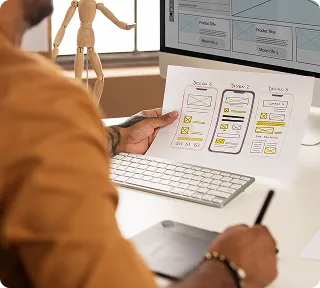


 AI-Assisted Test Planning
Test creators and scenarios use AI tools to speed up the process while providing Testers with human creativity and knowledge of the domain about the acceptable and acceptable test plans.
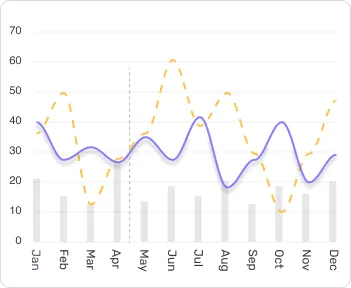
 Intelligent Bug Clustering
Auto-classify all like defects automatically using ML to group like defects. Using AI will help us identify defect trends across the application so we can help developers find the root cause instead of just addressing individual symptoms.
 Smart Test Prioritization
AI predicts risk based on code changes/areas/places where bugs are likely. Manual testing resources can be focused on the areas of highest likelihood of defect occurrence.
 Automated Reporting Dashboards
Using AI dashboards to track overall testing progress, total defect trends, total quality metrics, and other reports automatically for stakeholders without any manual reporting.

Explore our portfolio of successful digital solutions delivered to clients worldwide.

AI homework app helps students in math and problem-solving. It offers clear, step-by-step explanations and instant answers via an intuitive mobile interface. Built with advanced AI, it prioritizes accuracy and conceptual understanding for scalable, continuous learning.


Simple vehicle app for quick RTO and details. Easy access to registration, status, and ownership info for informed decisions. Reliable, fast data, clear display, and user-friendly. Scalable, accurate, and always updated.


Archery app tracks performance, analyzes shots, and improves accuracy. Simple interface records scores, monitors progress, and reviews data for all archers. Reliable tracking and clear visuals support consistent training and skill development.


Build an intelligent HRMS platform simplifying HR operations by automating employee management, performance tracking, and HR administration. Unify HR functions to eliminate inefficiencies, reduce manual effort, and enable data-driven decisions, streamlining processes and improving HR efficiency.
View Project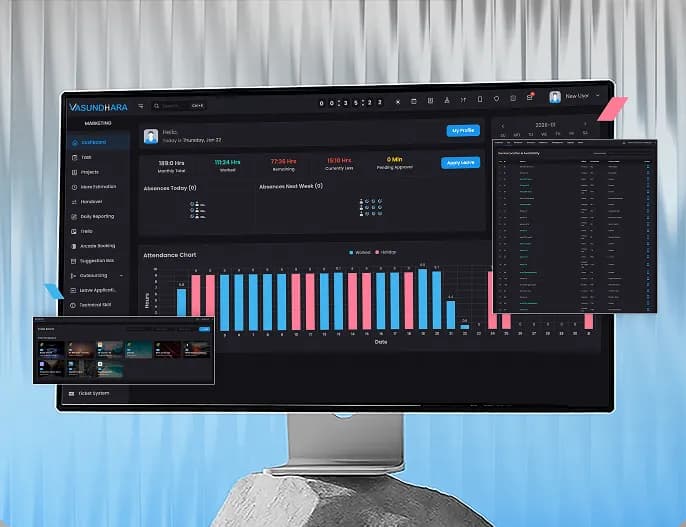

We create realistic 3D art and animations for games, apps, marketing, and digital products. Our detailed models, textures, and animations enhance engagement and brand presence.
View Project
Contact us for a personalized cost estimate and consultation. Let's build a manual testing program that catches critical bugs and delivers exceptional user experiences!

$1,200–$3,500/month
For a basic manual testing plan that:

24-48 hours
$3,500–$8,000/month
For a standard manual testing plan that:
8-12 hours
From $8,000/month
For a premium manual testing plan that:
4-6 hours
The right technologies and platforms help build scalable, secure, and high-performing solutions that support faster development and long-term business growth.


Your support has been instrumental in shaping who we are today.


"Working with Bansi was great! Despite some backend issues on our side, she remained patient and collaborated effectively to complete the app."

"Vasundhara's exceptional service and dedication consistently exceed our expectations. We value our partnership and look forward to future success together."

"Vasundhara Infotech LLP has boosted our productivity and expanded our development capabilities. Their consistently high-quality work has truly impressed us."

"It is always a pleasure working with Vasudhara Infotech. They are a responsive, skilled, and reliable team!!"

Ronak & Harsh & Vimal & the Vasundhara team are truely trailblazing backend & web portal developers. I have worked with many developers in my life. Never have I been so impressed with the skill level and the cooperation and flexibility. We are now working together for 1,5 years soon. We are working on a tough project. And the team will never falter. They always have a can-do attitude despite a multitude of changes. We had also difficult development steps including AI integration. They always figured it out. I can only highly recommend to work with Vimal & Harsh & Ronak and team!

Vasundhara are very gentle and professional workers. They deliver above the expectation and don't have a problem to listen to your ideas.

They started delivering ahead of schedule for both iPhone and Android. A huge advantage is they delivered the application in both Arabic (required language) and English (used during development). They gladly incorporated changes requested and performed bug fixes, even after successful delivery of the project. Now I have new features and they will be working on it in a new project.
"Working with Bansi was great! Despite some backend issues on our side, she remained patient and collaborated effectively to complete the app."
"Vasundhara's exceptional service and dedication consistently exceed our expectations. We value our partnership and look forward to future success together."
"Vasundhara Infotech LLP has boosted our productivity and expanded our development capabilities. Their consistently high-quality work has truly impressed us."
"It is always a pleasure working with Vasudhara Infotech. They are a responsive, skilled, and reliable team!!"
Ronak & Harsh & Vimal & the Vasundhara team are truely trailblazing backend & web portal developers. I have worked with many developers in my life. Never have I been so impressed with the skill level and the cooperation and flexibility. We are now working together for 1,5 years soon. We are working on a tough project. And the team will never falter. They always have a can-do attitude despite a multitude of changes. We had also difficult development steps including AI integration. They always figured it out. I can only highly recommend to work with Vimal & Harsh & Ronak and team!
Vasundhara are very gentle and professional workers. They deliver above the expectation and don't have a problem to listen to your ideas.
They started delivering ahead of schedule for both iPhone and Android. A huge advantage is they delivered the application in both Arabic (required language) and English (used during development). They gladly incorporated changes requested and performed bug fixes, even after successful delivery of the project. Now I have new features and they will be working on it in a new project.


