business
What Is Ghost Commerce? Complete Beginner’s Guide

 Dec 26, 2025


Key Takeaways
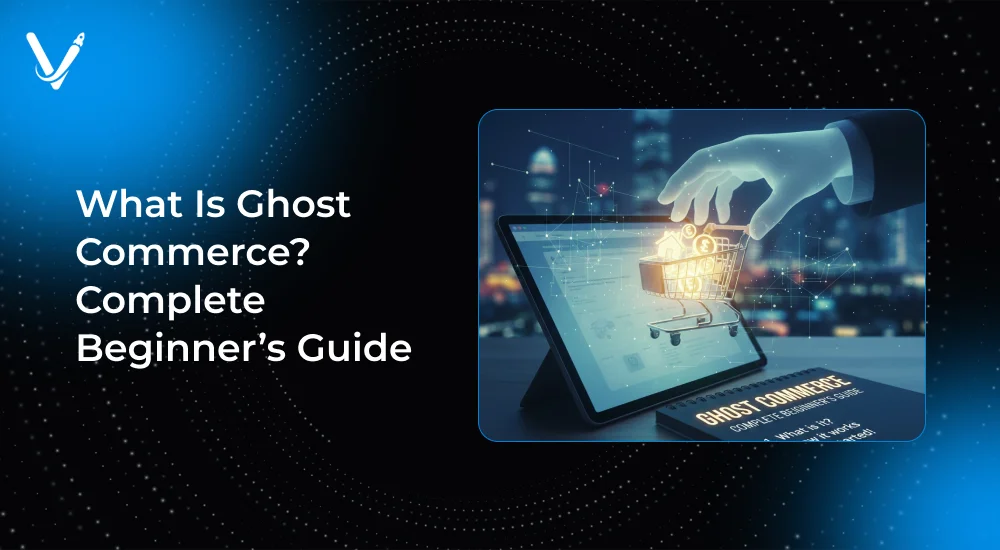
Imagine buying a product without browsing an online store, adding items to a cart, or completing a checkout page. The purchase happens quietly in the background, guided by artificial intelligence, user behavior, and contextual signals. This is not science fiction. This is ghost commerce.
Ghost commerce represents a powerful shift in digital business where transactions occur seamlessly, often unnoticed by the customer. There are no visible sales funnels, no aggressive ads, and no constant buying decisions. Instead, intelligent systems predict intent, automate fulfillment, and deliver value at the exact right moment.
This guide is designed for beginners who want clarity without complexity. You will explore what ghost commerce truly means, how it works, why it matters, and how businesses already benefit. You will also learn about the technologies behind it, real-world use cases, advantages, challenges, and future trends.
By the end, you will understand why ghost commerce is gaining momentum and how organizations can prepare for this silent but powerful evolution in digital commerce.
Ghost commerce is a modern digital commerce model where transactions happen automatically with minimal or no direct user interaction. The buying process feels invisible because intelligent systems handle product selection, decision logic, and fulfillment in the background.
In simple terms, ghost commerce removes the visible steps of traditional ecommerce. There is no need for users to browse catalogs, compare prices, or manually confirm purchases. Artificial intelligence and automation handle those tasks based on preferences, habits, and contextual data.
This model relies heavily on AI commerce systems that analyze behavior patterns and trigger transactions when value alignment is high. The result is a frictionless experience that feels natural rather than transactional.
Ghost commerce is also known as invisible commerce, automated commerce, or silent commerce. All these terms describe the same idea: commerce that happens without conscious effort.
Traditional ecommerce depends on active participation. Users search products, read reviews, add items to carts, and complete checkouts. Each step introduces friction and potential abandonment.
Ghost commerce removes those steps. The system already knows what the user needs and acts accordingly. Purchases occur through subscriptions, smart replenishment, voice assistants, connected devices, or embedded AI triggers.
Key differences include:
This shift allows businesses to focus less on conversion tactics and more on value delivery.
Ghost commerce depends on several advanced technologies working together. Each plays a vital role in creating seamless and automated buying experiences.
AI is the brain behind ghost commerce. Machine learning models analyze user behavior, preferences, timing patterns, and contextual signals. These insights enable accurate predictions about what a user needs next.
AI models continuously learn and improve, refining recommendations and transaction timing. This leads to higher satisfaction and reduced friction.
Ghost commerce relies on high-quality data. Behavioral analytics track usage patterns, consumption cycles, and engagement signals. This data helps systems decide when and what to purchase.
Predictive analytics also play a role by anticipating future needs rather than reacting to past actions.
Automation ensures that once a decision is made, the transaction happens smoothly. Payment processing, inventory updates, fulfillment, and notifications are handled automatically.
This reduces manual effort and operational overhead.
Ghost commerce ecosystems connect multiple platforms through APIs. Payment gateways, logistics providers, CRM systems, and AI engines communicate in real time.
These integrations enable end-to-end automation without visible touchpoints.
Connected devices such as smart refrigerators, wearables, and voice assistants often act as triggers. They detect usage levels or contextual needs and initiate purchases automatically.
This hardware-software synergy is a major driver of invisible commerce.
Ghost commerce may feel magical, but the process follows a clear logic.
The user may only notice the result, such as a product arriving or a service renewing.
Ghost commerce already exists across many industries.
Streaming platforms, software tools, and digital memberships operate quietly in the background. Renewals happen automatically based on usage and value perception.
Household essentials such as groceries, pet food, and toiletries can be reordered automatically when supplies run low.
Voice assistants enable hands-free purchases using conversational commands. The system handles product selection and payment.
Purchases occur inside apps, content platforms, or devices without redirecting users to external stores.
Businesses use AI-driven procurement systems that auto-order supplies based on consumption and demand forecasting.
Ghost commerce offers significant advantages that extend beyond convenience.
By removing friction, ghost commerce reduces decision fatigue and abandonment. Transactions occur at optimal moments.
Users enjoy seamless service without repetitive actions. This builds trust and loyalty.
Automation reduces manual processes, staffing needs, and error rates.
Subscriptions and automated purchases create steady income streams and better forecasting.
Ghost commerce systems scale easily without proportional increases in operational complexity.
Customers also gain meaningful value.
When implemented ethically, ghost commerce feels like a helpful assistant rather than a sales tactic.
Despite its advantages, ghost commerce presents challenges that businesses must address carefully.
Users need clarity and control. Invisible transactions can feel unsettling if communication is unclear.
Ghost commerce depends on personal data. Strong privacy practices and compliance are essential.
Excessive automation may lead to irrelevant purchases or reduced user control.
Businesses must avoid manipulative practices and respect user autonomy.
Building reliable AI and automation systems requires expertise and investment.
Successful ghost commerce strategies follow thoughtful principles.
These practices help build long-term trust and adoption.
Ghost commerce impacts digital marketing and SEO in unique ways.
Traditional product pages matter less when purchases happen invisibly. Instead, content focuses on education, trust building, and brand authority.
Important SEO keywords include:
High-quality content helps users understand value and builds confidence in automated experiences.
Ghost commerce adoption is accelerating across multiple sectors.
Automated replenishment and personalized subscriptions are becoming standard.
Medication refills and wellness services benefit greatly via automation.
Recurring payments and intelligent financial management align well with ghost commerce.
Usage-based billing and auto-renewals drive predictable revenue.
Connected devices naturally enable invisible purchasing.
Ghost commerce is not a passing trend. It represents a foundational shift in how value is exchanged digitally.
Future systems will become more context-aware, emotionally intelligent, and adaptive. AI agents may act as personal buyers, negotiating and optimizing purchases on behalf of users.
As technology evolves, businesses that embrace invisible commerce early will gain competitive advantage.
Ghost commerce is redefining digital business through AI-powered automation, invisible transactions, and deeply personalized experiences. It removes friction, improves efficiency, and aligns purchasing with real needs rather than forced decisions.
For businesses, ghost commerce offers scalable growth, predictable revenue, and stronger customer relationships. For users, it delivers convenience, simplicity, and value without constant effort.
The key to success lies in ethical implementation, transparency, and intelligent system design.
Vasundhara Infotech helps organizations design and build AI-driven commerce solutions that feel natural, secure, and future-ready. If you are ready to explore ghost commerce and unlock smarter digital growth, connect with us today and turn invisible opportunities into real results.
Copyright © 2026 Vasundhara Infotech. All Rights Reserved.